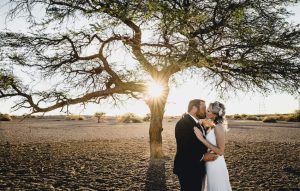

For many South Africans, marriage is a significant legal and personal milestone. Whether the celebration takes place in South Africa or abroad. Namibia has a straightforward legal framework for marriage. This makes it possible for South Africans to marry each other, Namibian citizens or other foreign nationals within the country. However, the process requires compliance with specific legal requirements and documentation.
Marriages in Namibia are governed by the recently amended Marriage Act (Act No. 14 of 2024). This Act outlines the legal requirements for a recognised marriage in the country. For a marriage to be considered valid and legally recognised in Namibia, it must be registered. This usually involves notification of the local registrar, followed by a civil or religious ceremony within 90 days.
This article discusses the legal intricacies of marriage in Namibia for South Africans, including key legal requirements, the importance of antenuptial contracts, and practical planning considerations.
Key legal requirements
In Namibia, marriages can be formalised through a customary, civil or religious ceremony.
A civil marriage is recognised by the Namibian government and is usually conducted by a civil servant. This type of ceremony focuses primarily on legal documentation rather than customs and traditions.
A religious, customary ceremony, often conducted within a place of worship, can also be legally recognised in Namibia if properly registered with the civil authorities.
To legally marry in Namibia, you must meet several criteria:
- Minimum Age: Both parties must be at least 18 years old.
- Marital Status: Neither partner can be presently married to someone else.
- Relationship Restrictions: No unions between close blood or adopted relatives.
- Consent: Both partners must give their free and informed consent.
- Officiant & Witnesses: A licensed marriage officer must conduct the ceremony, and two witnesses (with IDs) must be present.
For South African expatriates, a few additional documents are required:
- Valid passport bearing entry stamps into Namibia
- Birth certificate(where requested)
- Certificate of No Impediment (issued within the last six months)
- If applicable, divorce or death certificates
- Police clearance certificate (where requested)
- DIRCO apostille certificate: for all official south African documents and certified English translations for any documents issued in Afrikaans
Notification of intention to marry and pre-marriage confirmation
Most couples start the process by providing formal notice of their intention to marry at their local Namibian registrar or magistrate court, typically 90 days before the planned wedding date. The registrar will then display your details in a public area (and sometimes online) for 21 days to allow time for any valid objections to be raised. If no objections are raised, a pre-marriage confirmation certificate will be issued, allowing you to proceed with your wedding.
Contact your local register office to find out more about giving notice, the documents you should take with you, and the fees.

The Importance of Antenuptial Contracts
While not very romantic, property ownership and financial arrangements are vital considerations for any marriage. Antenuptial contracts are agreements signed before marriage to clarify how your current and future assets will be managed and divided.
In Namibia, if no antenuptial contract is signed before the wedding, the law deems the union to be ‘in community of property’. This means that all assets, whether acquired before or after the wedding, are considered jointly owned and split equally in the event of divorce.
An ANC is particularly important if either party has assets, businesses or property in South Africa or Namibia. To be legally binding, the contract must be signed in front of a notary before the wedding and filed at the Deeds Office within three months of signing. If this is not done in time, the default community property rule applies, regardless of the original intentions.
Practical planning of the legal side
- Plan early: To ensure a smooth process, it is advisable to contact the local registrar in Namibia well in advance to obtain the most up-to-date information on paperwork requirements and processing times.
- Consider hiring a wedding planner: Local experts can handle the registration and administration for the couple. Many resorts and lodges offer in-house planners who will take care of the legalities, leaving you to focus on the celebrations.
- Start gathering documents early: Apostilles, translations and non-impediment certificates from South Africa can take time, so begin the process several months in advance to prevent delays.
Document translation and apostille Support
At Afrikaans Translation, we provide an end-to-end concierge service for official South African documents.
In addition to official sworn Afrikaans/English translations, we handle document applications at the Department of Home Affairs, as well as the legalisation of birth certificates and certificates of non-impediment at the Department of Foreign Affairs. Whether you’re in South Africa or Namibia, our streamlined process can save you time and hassle.
Simply send us your documents. Within 24 business hours, our team will evaluate your files and provide a complete cost assessment and timeline, with total transparency.
Cell/ WhatsApp:: +27 81 347 6060
Tel: +27 12 348 3134
E-mail: info@afrikaanstranslation.co.za